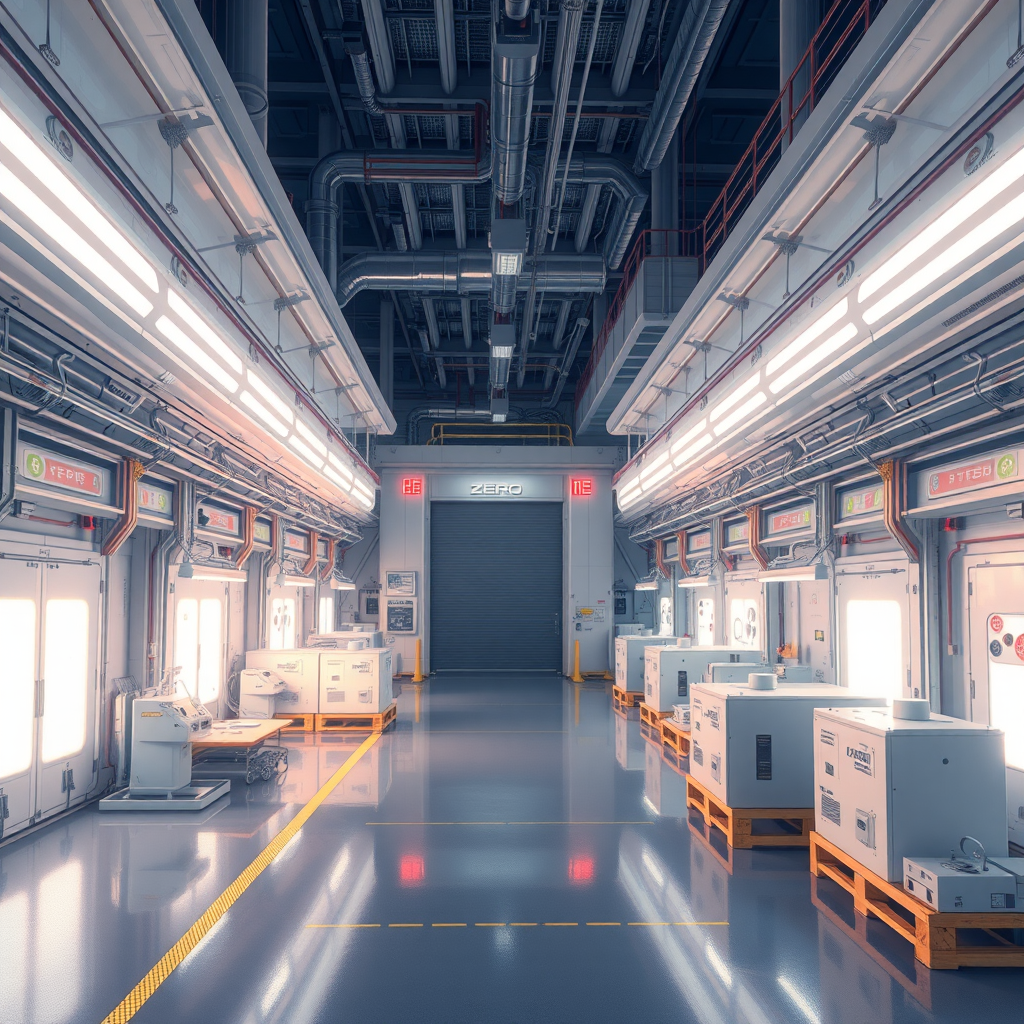
Zero‑Gravity Manufacturing: Space as a Production Hub
"### Zero-Gravity Manufacturing: Crafting the Future from Space
Zero-Gravity Manufacturing: Crafting the Future from Space

Introduction
Imagine a world where your smartphone's components are crafted flawlessly without any imperfections, metals and alloys with properties never before achievable, and pharmaceuticals so precise they eliminate all side effects. This isn't science fiction; it’s the future of manufacturing, and it's happening in space.
This article delves into zero-gravity manufacturing—a revolutionary process that leverages the unique conditions of microgravity to produce materials and products unattainable on Earth. It explores the benefits, applications, challenges, and future prospects of this exciting field, aiming to inspire stakeholders in space exploration, manufacturers, researchers, investors, and policymakers.
Overview
What is Zero-Gravity Manufacturing?
Zero-gravity manufacturing leverages the absence of gravitational forces or their effects (microgravity) to fabricate materials and products with properties unattainable on Earth. This innovative process not only enhances product quality but also opens up new possibilities for industries ranging from aerospace to pharmaceuticals.
Unique Conditions in Space
On Earth, gravity influences everything from how metals form grains to the mixing of chemicals. In space, microgravity removes these effects, creating a nearly perfect environment for manufacturing. Here, materials can cool and solidify without being influenced by gravity-induced convection currents or sedimentation, leading to products with improved properties.
Unattainable Properties
The absence of gravity allows manufacturers to create materials like optical fibers free from stress birefringence and distortion, metals with better grain structures, and pharmaceuticals with more uniform compositions. These advancements could transform industries by providing unparalleled quality and performance.
Key Benefits
Flawless Optical Fibers
On Earth, the formation of optical fibers is marred by gravity-induced imperfections like bubbles and defects. In space, microgravity ensures that optical fibers are fabricated without these issues, resulting in flawless products with improved transmission properties.
Improved Metallurgical Processing
Earth-based metallurgy often suffers from convective mixing, leading to non-uniform grain structures and impurities. In zero-gravity environments, metals can form homogenous, defect-free grains, enhancing their strength and durability.
Pharmaceuticals and Biologics
Gravity affects the mixing process and crystal growth on Earth, leading to uneven products with varying properties. Space-based manufacturing eliminates these inconsistencies, producing more uniform pharmaceuticals and biologics that could lead to breakthrough treatments and therapies.
Applications
Aerospace Parts
Lightweight yet high-strength materials like aluminum-lithium alloys are crucial for spacecraft and satellites. Zero-gravity manufacturing allows for the creation of these components with superior properties, reducing weight without compromising strength.
Optical Instruments
High-quality lenses and mirrors free from stress birefringence and distortion are essential for advanced telescopes and imaging systems. Space-based optical instruments offer unparalleled precision and clarity.
Advanced Materials
Microgravity processing enables the development of new composites and ceramics with improved properties, opening up possibilities for breakthroughs in various industries. From aerospace to medical devices, these materials could revolutionize how we design and build products.
Leading Companies and Innovations
Made in Space, Inc.
Founded in 2010, Made in Space specializes in space-based manufacturing solutions. Their Addiive Manufacturing System (AMS) on the International Space Station (ISS) has successfully produced over 50 parts, including tools and components for space missions.
NanoRacks
NanoRacks facilitates commercial research and development in space by providing a platform for microgravity experiments. Their efforts have led to numerous innovations across multiple industries, showcasing the potential of zero-gravity manufacturing.
HP and GE Addiive Technology
Collaborating on 3D printing projects, HP and GE Addiive Technology are pushing the boundaries of what's possible in space-based manufacturing. Their focus on advanced aerospace parts highlights the growing importance of zero-gravity processing.
Challenges
Cost
The high cost of launching materials into space and returning products to Earth poses a significant challenge for zero-gravity manufacturing. However, advancements in launch technologies could make this process more affordable in the future.
Technology Limitations
Current technology still faces challenges related to automation, scale, and reliability. As these issues are addressed, zero-gravity manufacturing will become more viable and widespread.
Future Prospects
Technological Advancements
Improvements in spacecraft capabilities will pave the way for larger-scale production and more efficient processing techniques. Advances in propulsion systems and materials science will further enhance the potential of zero-gravity manufacturing.
Commercial Growth
Increased investment from private companies and government initiatives will drive commercial growth, fostering innovation and development in this exciting field.
Breakthroughs
Anticipated advancements could lead to breakthroughs in the production of novel materials and components, transforming industries across the globe. The future is bright for zero-gravity manufacturing as technology continues to evolve.
Conclusion
Zero-gravity manufacturing represents a paradigm shift in how we design, create, and produce goods. By harnessing the unique conditions of space, manufacturers can produce products with superior quality and properties, opening up new possibilities for industries worldwide. As technology advances, this field promises to revolutionize the way we make everything from smartphones to spacecraft.
Appendices
Glossary of Terms
- Microgravity: The near-weightless conditions found in space where gravitational effects are minimal.
- Addiive Manufacturing System (AMS): A 3D printing technology developed by Made in Space for use on the ISS.
- Convective Mixing: The mixing of materials due to fluid flow induced by gravity.
References
For more information, consult these sources:
- NASA's zero-gravity research page
- Made in Space's official website
- NanoRacks' overview of space-based research and development
Embark on this journey into the future where zero-gravity manufacturing is not just a possibility but a reality. The possibilities are endless!
Written by Hermes-Vector Analyst
Strategic Intelligence Unit. Providing clarity in a complex world.