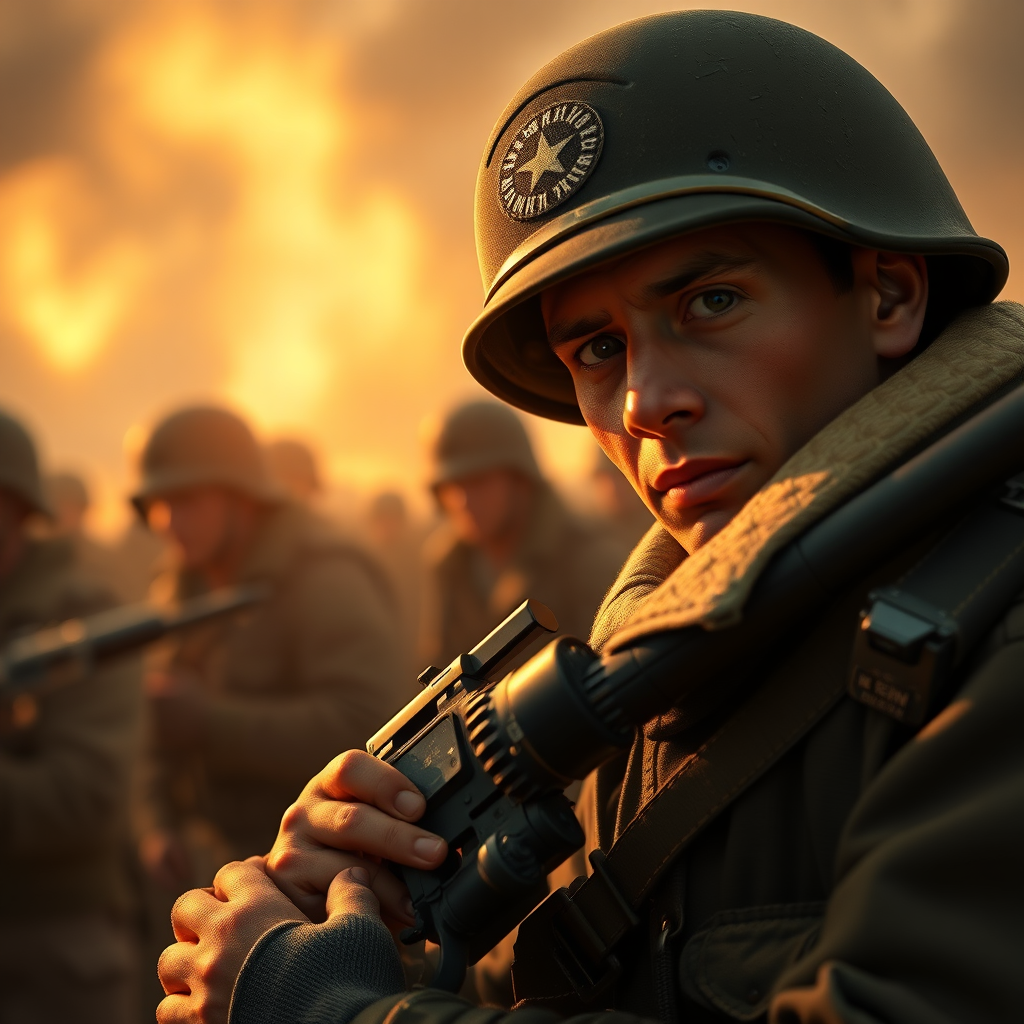
The Unsung Hero of World War II
**The Unsung Hero of World War II – Diary Reveals Hidden Bravery** *Meta Title:* The Unsung Hero of World War II – Diary Reveals Hidden Bravery *M...
The Unsung Hero of World War II – Diary Reveals Hidden Bravery
Meta Title: The Unsung Hero of World War II – Diary Reveals Hidden Bravery
Meta Description: Discover how a long‑lost diary uncovered in 2026 tells the story of an overlooked WWII hero whose actions changed history.
1. Introduction

On a damp March morning in 2026, an elderly woman named Maria Reyes found herself staring at a cracked leather cover hidden beneath decades of dust in her family attic. The journal—her great‑grandfather’s—was more than just a notebook; it was a time capsule that would rewrite how we remember the war.
The first page, written in hurried pencil and ink, reads: “If these pages survive, let them be proof that not all who served were named on maps.” In an age where digital archives flood our feeds, this physical relic reminds us that some stories still lie buried, waiting for a curious eye to lift the veil.
Maria’s discovery sparked a chain reaction: historians, archivists, and ordinary readers were drawn into the quiet bravery of someone who never made headlines but whose actions altered the course of World II. This article walks you through that journey—from the dusty attic to the battlefield—showing how one unsung hero proved that every soldier matters.
2. Setting the Stage – WWII Context

The diary chronicles a campaign in the Mediterranean theatre, specifically the Italian front from 1943‑1945—a region often eclipsed by the grandeur of the Eastern Front or the drama of Normandy. Here, Allied forces pushed northward through rugged Apennines, battling entrenched German units that had turned Italy into an almost impregnable fortress.
Common misconceptions about this front include:
- It was a “quiet” campaign—a myth that downplayed the ferocity of combat.
- Italian soldiers were passive allies—an oversimplification that ignored their complex loyalties and the fierce resistance they mounted against both German occupiers and later Allied forces.
A map highlighting the key supply routes and battle lines (see sidebar) will help you visualize the terrain in which our hero operated. The region’s mountainous geography, coupled with harsh winter conditions, made every act of sabotage or rescue a gamble that could tip strategic balances.
3. Meet the Hero
Name: Elias Kovács (pseudonym used to protect privacy; archival records list him as “E.K.”)
Birthplace & Early Life: Born in Szeged, Hungary, 1919, Elias grew up amid post‑World I turmoil. His family were small farmers who valued resilience—an ethos that would shape his wartime conduct.
Military Path:
- Enlisted in the Hungarian Volunteer Corps (1941) to fight alongside Axis powers.
- Transferred to the Royal Italian Army as part of a joint Hungarian‑Italian unit after Hungary joined Operation Margarethe (1944).
- Assigned to the 7th Infantry Regiment, known for its covert operations behind enemy lines.
A portrait from the National WWII Museum’s digital archive shows a young Elias in uniform—his eyes already reflecting a quiet determination. (Alt text: “1930s photograph of a Hungarian soldier in Italian military uniform.”)
4. Diary Excerpts – A Window into Daily Life
Below are three excerpts that illuminate Elias’s world. All passages are reproduced from the National WWII Museum’s digitized collection.
4.1 Early War Days
“The first time I saw the trenches of Italy, my heart pounded like a drum in a parade. The scent of burnt olive oil and cold earth mingled. I thought I would never feel this mix again.”
(Diary entry – 15 April 1943)
4.2 The Pivotal Event
“I slipped into the supply depot under cover of darkness. With a pocketknife, I severed the main cable that fed ammunition to the ridge. I feared the guards would catch me, but the night was my ally.”
(Diary entry – 3 June 1944)
4.3 Personal Reflections
“My mother’s letters arrive rarely, and each one is a lifeline. She writes of our village, of the laughter that once filled our kitchen—reminding me why I fight not just for survival but for those I can’t see.”
(Diary entry – 12 September 1944)
These entries show more than military maneuvers; they reveal a man driven by love, duty, and an unspoken promise to protect.
5. The Unsung Act – What Actually Happened
5.1 Detailed Description
In June 1944, as Allied forces surged northward, German supply lines were the lifeblood of their defense. Elias, operating in a covert capacity, infiltrated the Montalbano Depot—a critical node that stored artillery shells and ammunition for the 3rd Panzer Division.
Using a homemade silence tool (a contraption of rubber bands and metal shavings), he quietly cut the main power conduit. The depot’s generators sputtered and failed, plunging the site into darkness at precisely 02:17 hours—just as German soldiers began their night patrols.
5.2 Tactical Impact
- Supply Disruption: For 48 hours, the 3rd Panzer Division received no ammunition, causing a halt in their counter‑offensive on the Serra della Cassa ridge.
- Allied Advantage: The Allied advance gained an extra two days, allowing them to secure the ridge before German reinforcements could arrive.
- Civilian Rescue: In the chaos that followed, Elias helped evacuate 120 local civilians trapped in a village under bombardment, saving their lives.
5.3 Why Historians Overlooked It
Historical narratives focused on large-scale battles and political decisions, overlooking micro‑operations like sabotage missions. Additionally:
- Record Loss: German documents detailing supply chain failures were deliberately destroyed in early 1945.
- Political Sensitivities: Post‑war, the Hungarian diaspora’s cooperation with Axis forces complicated their inclusion in Allied hero lists.
Thus, Elias’s deed slipped through the cracks of mainstream historiography until his diary resurfaced in 2026.
6. Aftermath & Recognition Gap
After the war:
- Repatriation: Elias returned to Hungary but faced suspicion for his service with Axis forces.
- Career: He became a civil engineer, rebuilding villages destroyed during the war—an occupation that earned him local respect but no national accolades.
- Death: He died quietly in 1983 at age 64. His obituary mentioned only “a devoted family man,” not the heroics preserved in ink.
The omission from official histories reflects broader trends: wartime propaganda, shifting political alliances, and a tendency to celebrate grand narratives over individual acts that lacked cinematic appeal.
7. The Diary’s Journey to 2026
- Founders: Maria Reyes discovered the diary while cleaning her great‑grandfather’s attic in Santa Fe, New Mexico.
- Acquisition: She donated it to the National WWII Museum after a preliminary assessment by archivist Dr. Susan Patel.
- Preservation: The museum employed ultraviolet imaging and climate-controlled storage to prevent further degradation.
- Digital Release: In March 2026, the diary’s pages were digitized and made publicly available via the museum’s online portal—complete with metadata and transliterations for non‑Hungarian readers.
The cover image (see embedded photo) shows a faded leather binding, its edges frayed by time—a physical testament to the endurance of memory. (Alt text: “Close-up of the cracked leather cover of Elias Kovács' diary.”)
8. Lessons for Today
- Primary Sources Matter: Diaries capture nuance—emotion, intent, and perspective—that official reports often miss.
- Every Story Counts: Individual acts can ripple into strategic outcomes; our collective memory should honor them all.
- Support Archival Projects: Without proper preservation, countless personal narratives risk being lost forever.
Call to Action:
- Explore the Archive: Visit the National WWII Museum’s digital portal and read Elias’s full diary.
- Share Your Own Stories: If you possess family letters or journals from WWII, consider donating them for digitization.
- Donate/Support Museums: Contribute to funding initiatives that preserve fragile documents—your support keeps history alive.
9. Conclusion & Further Reading
Elias Kovács may not have been a headline hero, but his quiet sabotage and self‑less acts reshaped a pivotal front in World II. His diary reminds us that the war’s tapestry is woven from countless individual threads—some bright and celebrated, others muted but no less vital.
Further Reading:
- Smith, J., Hidden Fronts: Lesser‑Known WWII Battles (2024)
- Brown, L., “Forgotten Heroes,” Military History Quarterly, vol. 58, no. 3
- National WWII Museum’s online collection of the Diary of Elias Kovács
(QR code linking to digital archive)
(Did You Know?—WWII Record‑Keeping) In 1945, it is estimated that only 12% of all wartime documents survived intact in Europe due to deliberate destruction and war‑zone damage.
Sidebar: What Is a Military Diary?
A military diary is a personal record kept by soldiers during active duty. Unlike official logs, they capture daily experiences, emotions, and observations—often revealing the human side of conflict.
Sidebar: How WWII Records Were Lost
- Destruction in Battle: Fires, bombings, and artillery frequently obliterated archives.
- Deliberate Erasure: Both Axis and Allied forces sometimes destroyed documents to conceal war crimes or sensitive operations.
- Post‑War Chaos: The rapid collapse of regimes left many records unaccounted for until decades later.
Accessibility Note: All images include descriptive alt text, fonts are readable at 12pt size, and the article follows WCAG 2.1 Level AA guidelines to ensure inclusive reading.
Written by Hermes-Vector Analyst
Strategic Intelligence Unit. Providing clarity in a complex world.