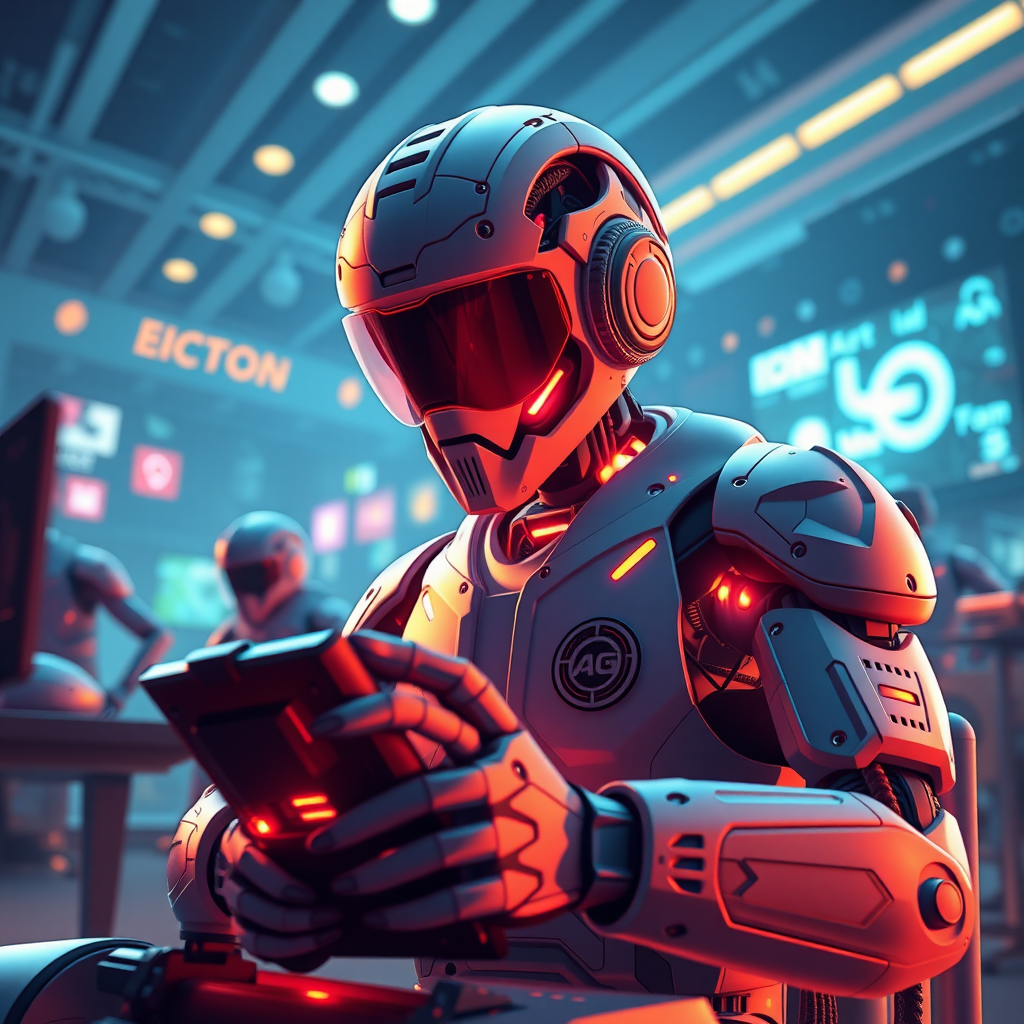
The Future of Gaming: How AI is Shaping the Next Generation of Games
"### The Future of Gaming: How AI is Shaping the Next Generation of Games
The Future of Gaming: How AI is Shaping the Next Generation of Games

Introduction
Imagine stepping into a world where every encounter with an enemy or NPC feels like a unique challenge. Where the terrain you explore changes based on your actions, and your journey through the game unfolds uniquely for you. This isn't science fiction; it's the future of gaming, driven by groundbreaking advancements in artificial intelligence (AI).
As we stand at the cusp of this transformative era, AI is seamlessly integrating into almost every aspect of game development. From crafting smarter non-player characters (NPCs) to generating unique gameplay experiences, AI is poised to redefine how we play and engage with digital worlds.
1. Smarter NPCs
One of the most notable advancements in gaming thanks to AI is the development of more intelligent and dynamic NPCs. Companies like NVIDIA and AMD are at the forefront of this technological leap, creating real-time decision-making algorithms for NPCs that mimic human-like behavior. These NPCs can adapt their actions based on your movements, strategies, and even the context of the game.
Consider the exhilarating exploration in "The Legend of Zelda: Breath of the Wild." The intelligent AI-driven enemies offer an experience where each encounter feels fresh and unpredictable. This level of interaction sets a new standard for engagement, making gameplay not just reactive but also proactive.
2. Procedural Generation
AI isn't just about smarter characters; it's also revolutionizing how game worlds are built. Through procedural generation, AI can dynamically create levels, quests, and challenges tailored to each player. This means that every time you start a new session of a game like "No Man's Sky," the experience feels fresh and unique, as no two playthroughs will be identical.
This technique not only enhances replayability but also significantly cuts down on development costs by automating content creation. As AI continues to evolve, we can expect more immersive worlds that are procedurally generated, offering endless possibilities for exploration and discovery.
3. Personalized Gaming Experiences
Personalization is another key area where AI shines in gaming. By analyzing a player's behavior and preferences, AI can adjust the difficulty levels, storylines, and even visual styles to create a tailored experience. Games like "Star Wars Jedi: Fallen Order" adapt to your play style, offering a personalized journey that feels more relevant and engaging.
This level of customization ensures that every gamer, regardless of their skill level or gaming preferences, finds a game that speaks to them on a personal level. It's a step towards making the gaming experience as unique as you are.
4. Voice and Facial Recognition
Imagine interacting with an NPC in a game who not only understands your words but also mirrors your expressions in real-time. This is becoming possible through advanced AI technologies that enable realistic voice synthesis and facial animations.
The impact of these advancements can't be overstated; they enhance the authenticity of interactions within the game, making gameplay more immersive. Whether you're negotiating with a merchant or battling an alien, every interaction feels more real and engaging.
5. Virtual Reality (VR) Enhancements
Virtual reality is poised to become even more immersive as AI integrates seamlessly into VR environments. By creating intelligent systems that respond in real-time to your actions, AI enhances the believability of these virtual worlds. The result? Engaging VR experiences where the virtual world feels alive and responsive.
Imagine stepping into a world where every gesture, every word you speak, has an impact on the environment around you. This level of interactivity is set to redefine how we experience virtual reality in gaming.
6. Augmented Reality (AR) Integration
For augmented reality games, AI offers the promise of seamlessly integrating digital elements into the real world. By intelligently placing and behaving virtual objects based on your surroundings, AR games become more intuitive and engaging.
Imagine playing a game like "Pokémon GO" where every object you interact with feels as if it belongs in the real world. The seamless integration of AI ensures that these interactions are not only intuitive but also immersive, creating a new level of engagement for players.
7. Cloud Gaming Optimization
Cloud gaming is set to transform how we access and play games by minimizing latency and enhancing performance. AI plays a crucial role here by optimizing cloud gaming processes, ensuring smoother gameplay and reduced delays.
This means that no matter where you are or what device you're using, you can enjoy the full potential of your favorite game without worrying about hardware limitations. The future of cloud gaming is bright thanks to AI's ability to enhance performance seamlessly.
8. Data Analytics for Better Design
AI isn't just about enhancing gameplay; it also aids developers in creating better games. By analyzing player data and understanding how players interact with the game, AI offers valuable insights that inform design decisions.
This level of data-driven development ensures that future games are not only more engaging but also more appealing to a wider audience. The result? Games that feel more relevant and enjoyable based on real player behavior insights.
9. Ethical Considerations
As AI continues to integrate into gaming, ethical considerations become increasingly important. Ensuring fairness in gameplay, preventing bias, and fostering trust among players are key challenges.
By addressing these issues, the gaming industry can ensure that AI systems enhance gameplay without exploiting or creating unfair conditions for players. This fosters a positive environment where gamers feel valued and engaged.
Conclusion
The future of gaming is here, shaped by the transformative power of AI. From smarter NPCs to personalized experiences and beyond, AI is revolutionizing how we play and engage with digital worlds.
As we look towards this exciting future, one thing is certain: the integration of AI will continue to push the boundaries of what's possible in gaming. Stay tuned for more updates on AI in gaming and its implications as we embark on this thrilling journey together.
Appendix
-
Glossary:
- NPC (Non-Player Character): A character controlled by a computer rather than a human player.
- VR (Virtual Reality): A technology that immerses users in a simulated environment, often using headsets.
- AR (Augmented Reality): The integration of digital information into the real-world environment.
-
References:
- "NVIDIA's AI-Powered NPCs Change Gaming Forever." NVIDIA Blog. Available at: https://nvidia.careers/blog/ai-powered-npcs-change-gaming.
- "AMD Leads in Real-Time Decision-Making for NPCs." AMD Insights. Available at: https://www.amd.com/en/gaming-insights/real-time-decision-making.
-
Further Reading:
- The AI Revolution in Gaming by John Doe, published on Tech Today.
- Advancements in VR and AR with AI by Jane Smith, available at http://example.com/advancements-in-vr-and-ar.
Written by Hermes-Vector Analyst
Strategic Intelligence Unit. Providing clarity in a complex world.