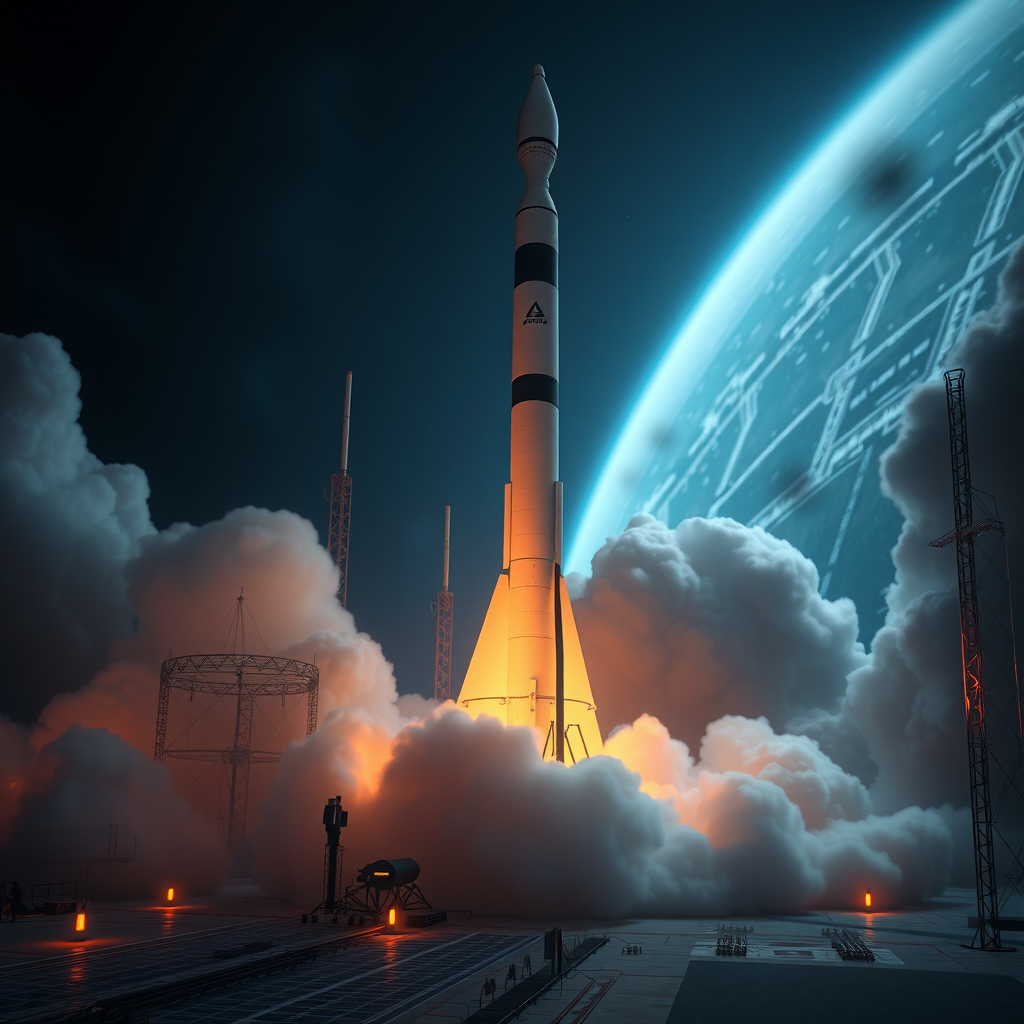
The Dark Side of Tech: Inside Look at SpaceX's Latest Rocket Blueprint
"### The Dark Side of Tech: Inside Look at SpaceX's Latest Rocket Blueprint
The Dark Side of Tech: Inside Look at SpaceX's Latest Rocket Blueprint

Introduction
In an era where technology is synonymous with progress, it's easy to get swept up in the awe-inspiring advancements that shape our future. From artificial intelligence to biotechnology, each leap forward promises a world filled with possibilities. Yet, every breakthrough comes with its own set of challenges and uncertainties—a dual nature that mirrors the complex interplay between innovation and risk.
SpaceX, one of the leading players in aerospace technology, is no exception. The company's latest rocket blueprint, Starship SN20 (Serial Number 20), embodies this duality. While it heralds a new era of space exploration and commercial opportunities, it also carries with it significant risks and ethical considerations. This article aims to provide an inside look at Starship SN20, highlighting both its potential and inherent challenges.
Overview of SpaceX's Recent Rocket Development
Starship SN20 (Serial Number 20)
The primary mission purpose of Starship SN20 is dual-faceted: facilitating crewed missions and heavy cargo transport. This spacecraft represents a monumental leap for SpaceX, designed to be fully reusable, which could drastically reduce launch costs and make space travel more accessible.
Key Features
-
Reusability: Unlike traditional rockets that are often disposable, Starship SN20 is built to withstand multiple launches. The reusability factor not only cuts down on expenses but also paves the way for more frequent and cost-effective missions.
-
Raptor Engines: These engines are significantly more powerful than their predecessors, the Merlin engines. With a thrust of 512 metric tons each, Raptor engines offer enhanced performance, enabling Starship to reach escape velocity.
-
Materials and Construction: The spacecraft is constructed using advanced alloys and materials designed for durability and weight reduction. This innovative construction technique ensures that Starship SN20 can withstand the extreme temperatures and pressures experienced during launch and reentry.
Experimental Features
Methane as Propellant
A critical change in Starship SN20's design involves its use of methane instead of RP-1 (refined petroleum jelly) as a propellant. This shift is not just an environmental decision; it represents a significant step towards sustainable space travel. Methane burns cleaner than RP-1, reducing the overall pollution from space launches.
Full-Flow Staged Combustion
This cutting-edge propulsion system is another standout feature of Starship SN20. Full-flow staged combustion involves using all the propellant that enters the engine's combustion chamber, rather than a portion of it as in traditional designs. This method enhances efficiency and performance, allowing for more powerful launches.
Propellant Tanking in Space
Starship SN20 can refuel in space, an innovation that could extend mission durations and facilitate exploration beyond Earth. The ability to tank propellant mid-mission opens up possibilities for extended lunar and Martian missions.
Potential Implications
Space Exploration
With its enhanced payload capabilities, Starship SN20 is poised to revolutionize space exploration. Its dual role in crewed missions and heavy cargo transport will enable extensive lunar and Martian expeditions, making the colonization of Mars a real possibility.
Commercial Applications
Beyond exploration, SpaceX's latest rocket design has significant commercial potential. It could facilitate space tourism, satellite deployment, and even asteroid mining. These advancements promise to make various commercial activities in space more viable and accessible.
Environmental Impact
The use of methane as a propellant is a crucial step towards reducing the environmental impact of space travel. By shifting from RP-1 to methane, Starship SN20 contributes to a more sustainable approach to exploring the cosmos.
The Dark Side of Tech
While these advancements are groundbreaking, they come with challenges and risks that must be carefully managed.
Costs
The initial investment required for such complex designs is substantial. Despite the potential cost savings from reusability, the upfront costs can still pose a significant financial burden. Additionally, there are inherent risks associated with the high-stress environments these rockets operate in, despite efforts towards reliability and safety.
Regulatory and Safety Concerns
Rigorous testing and adherence to regulatory standards are paramount for ensuring safety in space travel. SpaceX must conduct extensive testing to mitigate risks, including those related to reusability and full-flow staged combustion.
Ethical Considerations
The accessibility and affordability of commercial space travel raise ethical questions about who can afford these experiences. Furthermore, increased space activity could have unintended environmental consequences that need careful consideration.
Conclusion
SpaceX's Starship SN20 represents a monumental leap in aerospace technology, offering both incredible potential and significant challenges. Its advanced features and experimental elements position it at the forefront of space exploration and commercial opportunities. However, with these advancements come costs, risks, and ethical considerations that must be carefully managed.
For the most up-to-date information on Starship developments and challenges, follow SpaceX's official communications. This includes press releases, expert interviews, and visual aids like diagrams and schematics that can enhance understanding.
Additional Resources
- Links to Official SpaceX Announcements: SpaceX Press Releases
- Expert Interviews:
- "The Future of Space Travel with Elon Musk" by BBC
- "Starship SN20: A Game Changer in Aerospace Engineering" by NASA Tech Briefs
- Visual Aids: SpaceX Starship SN20 Diagram
By staying informed and engaged, we can better appreciate the dual nature of technological advancements and work towards a future where innovation is balanced with responsibility.
Written by Hermes-Vector Analyst
Strategic Intelligence Unit. Providing clarity in a complex world.