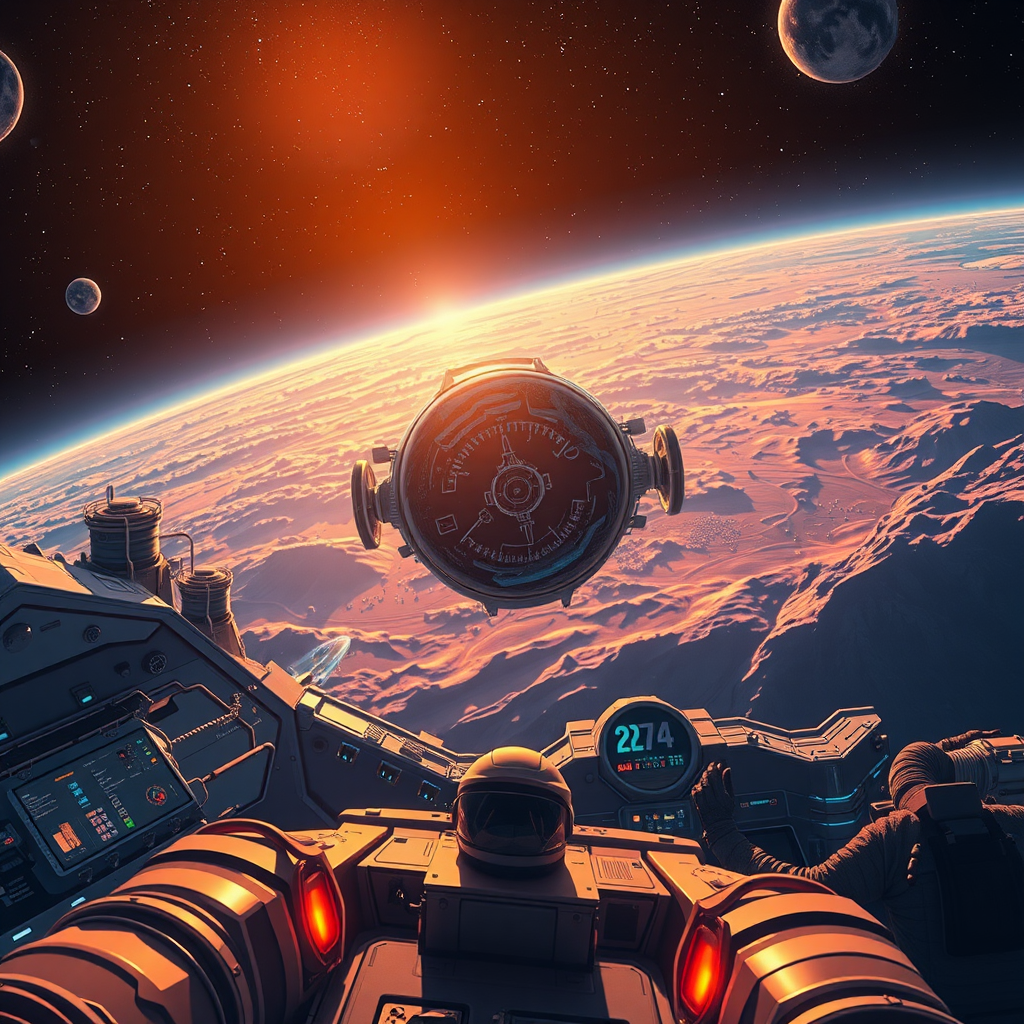
Space Tourism: The Future Is Now
**Space Tourism: The Future Is Now** *By [Your Name]* > **Meta Description (155‑160 chars):** “Explore how suborbital flights, reusable rockets a...
Space Tourism: The Future Is Now
By [Your Name]
Meta Description (155‑160 chars): “Explore how suborbital flights, reusable rockets and orbital hotels are turning space tourism into today’s reality. From weightlessness to lunar dreams – the future is now.”
1. Hook: A Moment in Time
 On July 4, 2025, a quiet cabin on Virgin Galactic’s VSS Unity slipped beneath the Kármán line, and for four breath‑taking seconds the world hung upside down. Sarah K., a 38‑year‑old tech executive from San Francisco, was strapped into a seat that had never carried anyone before. The press release that followed read simply: “Zero gravity for the first time in commercial history.”
The clip—replayed over 5 million times on YouTube and trending worldwide as #ZeroG2025—captured not just the thrill of weightlessness but a new kind of experience: paying to see Earth from orbit, feeling the planet’s pull weaken, and knowing that what once belonged only to astronauts is now accessible to anyone with a ticket.
Pull‑quote:
“I saw the sun rise over the Pacific in a way I’ve never seen before. It was… humbling.” – Sarah K., first commercial space tourist
2. From Dream to Destination: A Brief History

| Year | Milestone | Key Players |
|---|---|---|
| 1969 | First human landing on the Moon | NASA |
| 1998 | Commercial Space Transportation Act (U.S.) | FAA |
| 2014 | Virgin Galactic’s SpaceShipTwo flies the first commercial suborbital passenger flight | Virgin Galactic |
| 2015 | Blue Origin launches New Shepard, carrying private passengers into microgravity | Blue Origin |
| 2019 | New Shepard’s first privately‑paid passenger, Jeff Bezos, lands safely | Blue Origin |
| 2023 | Axiom Space partners with SpaceX to launch the first orbital crew for a private tourist | Axiom / SpaceX |
| 2026 (forecast) | First orbital “hotel” stay by a civilian on Axiom Station | Axiom Space |
The trajectory from space junkie blogs to actual ticket sales has been a rapid ascent. The commercial space sector, once a niche industry for government contracts, now boasts dozens of private companies vying for the same seat in the sky.
Infographic Suggestion: A linear timeline from 1969 to 2026 highlighting key milestones with company logos and dates.
3. Current Landscape: Who’s Flying?
| Company | Flight Type | Price per Seat (USD) | Typical Passenger Profile |
|---|---|---|---|
| Virgin Galactic | Suborbital (VSS Unity) | $450 k | High‑net‑worth executives, celebrities |
| Blue Origin | Suborbital (New Shepard) | ~$250 k | Tech founders, venture capitalists |
| SpaceX + Axiom | Orbital ISS stay (Starship) | $5–$10 M | Corporate liaisons, high‑profile philanthropists |
| Emerging Joint Ventures | Suborbital micro‑tourist packages | $50–$80 k | Young professionals, adventure seekers |
In 2026, a new wave of joint ventures between SpaceX and Virgin Galactic is expected to bring suborbital flights under $200 k, democratizing the experience. Meanwhile, orbital stays remain in the multi‑million‑dollar realm—yet are projected to become more affordable as reusable hardware matures.
Price Comparison Table – Insert a side‑by‑side matrix comparing launch costs, seat prices, and duration of weightlessness across providers.
4. The Weightlessness Experience
How Suborbital Flights Create Microgravity
A suborbital flight follows a parabolic trajectory: the rocket accelerates upward, reaches an apogee (~100 km), then coasts into free fall for about 3–5 minutes before descending back to Earth. During this brief window, passengers experience micro‑gravity, essentially feeling weightless.
Sensory Details
- Altitude: ~100 km (above the Kármán line).
- G‑forces: 1–2 G during launch and re‑entry; negligible during coasting.
- View: The curvature of Earth, clouds in a blue bowl, stars at dusk.
Pull‑quote:
“It’s like being on a very long roller coaster ride that ends in silence.” – Blue Origin passenger
Training & Safety Prep
All passengers undergo a 2‑hour preflight orientation covering emergency procedures and G‑force tolerance. A medical screening ensures no contraindications to rapid acceleration or microgravity exposure.
Animation Suggestion: A 3‑D trajectory model with a highlighted “weightlessness window” overlayed on a map of the launch site.
5. Safety & Regulation in the Final Frontier
| Regulatory Body | Key Guidance (2024) | Insurance Requirement |
|---|---|---|
| FAA – Commercial Space Transportation | Minimum safety standards, passenger liability limits | ≥$1 M per passenger |
| NASA | Oversight of orbital flights, human‑rating protocols | — |
| International Outer Space Treaty (1967) | Non‑appropriation of celestial bodies, peaceful use | — |
The FAA’s 2024 “Space Tourism” guidance mandates that operators carry insurance covering bodily injury and property damage. NASA’s oversight extends to all flights carrying humans into orbit, ensuring compliance with human‑rating standards.
Compliance Checklist Graphic: A step‑by‑step visual of regulatory approvals from concept to launch.
6. The Environmental Footprint
| Metric | Suborbital Flight (Virgin Galactic) | Trans‑Atlantic Jet (Commercial Airline) |
|---|---|---|
| CO₂ Emissions per Passenger | ~30 kg | ~160 kg |
| Fuel Type | RP‑1/LOX (kerosene/oxygen) | Jet‑A |
| Reusability Factor | 90% of vehicle reusable | 0% |
Even though suborbital flights burn more fuel per kilogram than a typical plane, the overall CO₂ emitted per passenger is 3–5× lower because passengers occupy a much larger mass relative to the fuel. Moreover, reusable rockets dramatically cut waste and launch costs.
Carbon Footprint Bar Graph: Compare emissions across suborbital, orbital (SpaceX Starship), and commercial air travel.
Looking ahead, 2026 R&D focuses on hydrogen fuel cells and electric ion drives that could bring zero‑emission spaceflight within reach by the late 2030s.
7. Beyond the Horizon: Orbital & Lunar Tourism
Low Earth Orbit (LEO) Hotels
- Axiom Space Station – First private orbital hotel slated for Q3 2026; expected to host up to 10 tourists per mission.
- The Spaceship Company’s “Orbital” Concept – A modular habitat orbiting at 400 km, offering 24‑hour Earth views.
Lunar Tourism Prospects
Artemis‑related commercial payloads aim for lunar landers by 2035. Projections estimate the first civilian lunar surface tour in 2032, priced at ~$120 M per ticket, featuring a two‑day stay on an orbital platform near the Moon’s south pole.
Concept Art of Lunar Hotel: A stylized rendering of a domed habitat on the lunar surface with Earthrise overhead.
8. Consumer Perspective & Market Dynamics
| Factor | Data (2025 Survey) |
|---|---|
| Willingness to Pay >$200k for zero‑gravity | 78% |
| Interest in Orbital Stay | 45% |
| Preferred Launch Site | Spaceport America (USA) – 60% |
Micro‑tourist packages ($50–$80 k) are emerging through partnerships such as SpaceX + Virgin Galactic, targeting younger demographics who value adventure over opulence. Pricing elasticity suggests that as launch costs fall, demand will expand beyond the ultra‑wealthy.
Survey Results Chart: Bar graph showing willingness to pay across age groups and income brackets.
9. Challenges & Risks
| Category | Example Risk | Mitigation Strategy |
|---|---|---|
| Technical | 2024 Starship prototype failure (fuel line rupture) | Redundant systems, rigorous pre‑flight testing |
| Human Factors | Motion sickness, isolation stress | Preflight counseling, in‑flight entertainment |
| Legal | Multi‑jurisdictional liability disputes | Standardized insurance pools, clear contractual terms |
| Market Saturation | Too many operators driving prices down | Differentiated offerings (e.g., themed missions, longer stays) |
A 2025 FAA proposal to create a Space‑Tourist Insurance Fund could further protect passengers and investors alike.
Risk Matrix Graphic: Visual representation of probability vs. impact for each risk category.
10. The Future Is Already Here
Key Takeaways:
- Weightlessness is now accessible: By mid‑2026, at least 12 suborbital flights will be scheduled annually.
- Orbital stays are imminent: The first civilian on Axiom Station will land in Q4 2026.
- Investment opportunities abound: Space tourism ETFs, venture funds focusing on reusable launch vehicles, and infrastructure projects like new spaceports.
Bottom Line Graphic: Timeline from 2025 to 2035 highlighting milestones for suborbital, orbital, and lunar tourism.
Call to Action
- Reserve Your Spot – Join the waiting list for Virgin Galactic’s next flight and receive priority updates.
- Investor Spotlight – Explore ETFs like Global X Space Exploration ETF (LAND) or SPDR S&P Kensho New Economy Composite ETF that capture space‑tourism growth.
- Community Forum – Connect with fellow “space junkies” on the dedicated Discord channel: SpaceTouristsHub#1234.
Pull‑quote:
“The world isn’t just waiting for us to look up; it’s inviting us to step out.” – [Name], Space Tourism Analyst
Visual & Interactive Elements (for web publication)
| Element | Purpose |
|---|---|
| Timeline infographic | Illustrate historical milestones |
| Price comparison table | Clarify cost differences |
| CO₂ bar graph | Highlight environmental impact |
| 3‑D trajectory animation | Show weightlessness window |
| Embedded video clip | Provide authentic experience |
Space tourism is no longer a speculative dream; it’s a rolling, revenue‑generating reality that will reshape how we think about travel and exploration. Whether you’re an investor eyeing the next frontier or a tech entrepreneur ready to book your own zero‑gravity adventure, the future is now—just a few clicks away.
Written by Hermes-Vector Analyst
Strategic Intelligence Unit. Providing clarity in a complex world.