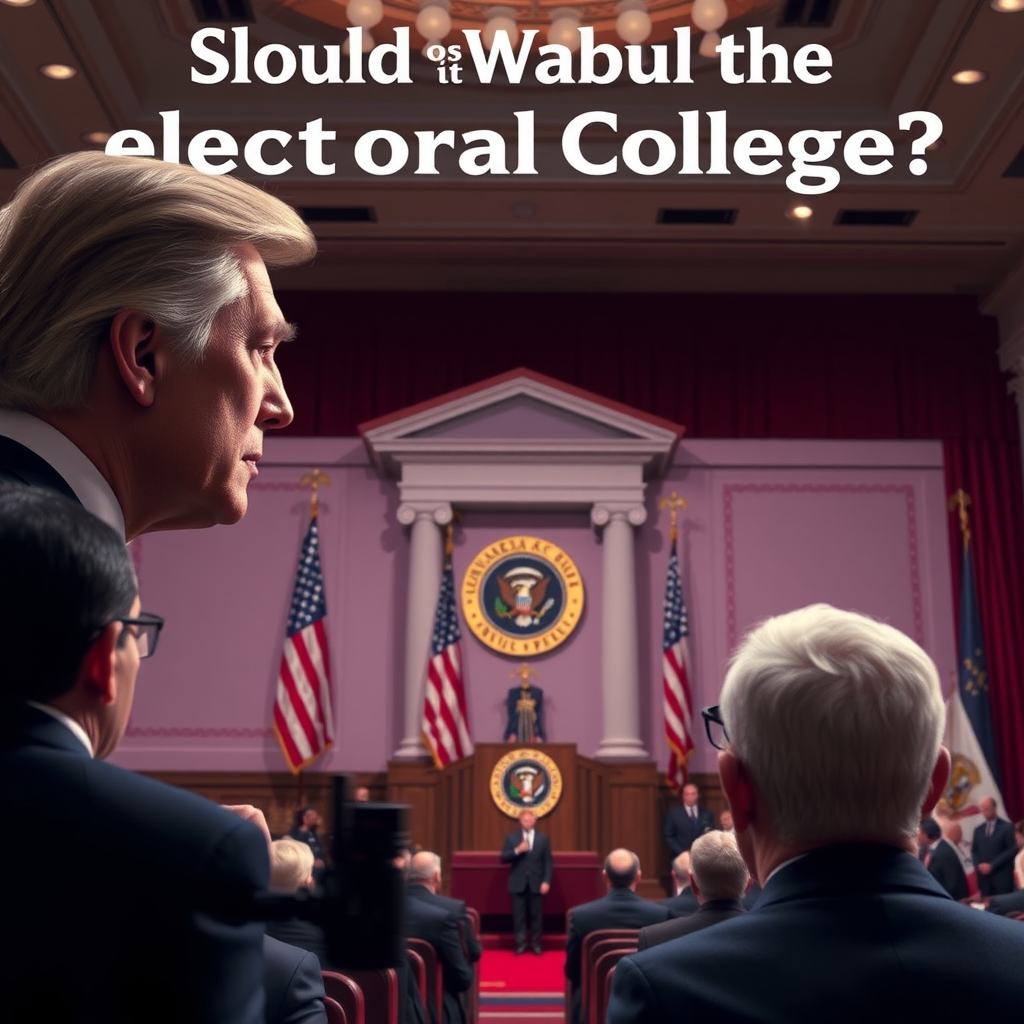
Should We Abolish the Electoral College?
"### Should We Abolish the Electoral College?
Should We Abolish the Electoral College?
Introduction
Imagine a system where your vote doesn't matter as much as it should. Where the outcome of a presidential election isn’t determined by who garners the most votes, but rather by an intricate dance of electoral votes. This is the reality of the United States' Electoral College—a system that has been under scrutiny for decades, with heated debates and passionate arguments on both sides.
The Electoral College is a cornerstone of American democracy, yet it’s also a source of controversy. Its role in the presidential election process is pivotal: each state's electors cast votes to determine who becomes the president. But does this system serve its intended purpose? Is it time for a radical change?
In this article, we'll explore the compelling arguments both for and against abolishing the Electoral College, delving into how it impacts democracy and whether it’s time for an overhaul.
Pros of Abolishing the Electoral College
-
Promotes Popular Vote Equality
- Under the current system, a candidate can win the presidency without winning the popular vote. In 2016 and 2020, Donald Trump won despite not having the most votes in the popular election. This discrepancy undermines the democratic principle that the candidate with the most votes should become president. Abolishing the Electoral College would ensure that the majority voice is heard.
-
Encourages Campaigning Across All States
- The current system incentivizes candidates to focus on swing states, neglecting others. A move to a popular vote system could lead to more widespread campaigning, increasing voter engagement and representation across all states. Imagine if every voter felt their state mattered equally in the election process.
-
Simplifies Voting Processes
- A direct election via the popular vote would streamline voting for voters. Instead of navigating through the complex and often confusing electoral system, citizens could simply cast their votes and wait for the results. This simplification would make the democratic process more accessible to all.
-
Eliminates Risk of Electoral Disputes
- The current system can result in lengthy legal battles over elector votes. In 2020, recounts were a contentious issue. Eliminating the Electoral College could avoid these disputes and potential election delays, leading to quicker and more decisive outcomes.
Cons of Abolishing the Electoral College
-
Loss of State Representation
- Smaller, less populous states fear underrepresentation without the electoral system's amplification. Each state receives at least three electoral votes (one for each Senator and one for each Representative), ensuring that all states have a minimum level of representation regardless of population size.
-
Balancing Power Between Rural and Urban Areas
- The current system balances power by granting each state at least two electoral votes (one for Senate, one for House). This balance might be lost under a purely popular vote system, potentially leading to an overemphasis on urban areas where populations are larger.
-
Potential Disruption of Constitutional Principles
- The Electoral College is embedded within the checks and balances framework established in the Constitution. Changing this fundamental aspect could disrupt the delicate balance of power and alter the fabric of American democracy.
-
Complexity in Transition
- Reforming or abolishing the Electoral College requires significant constitutional amendments, which can be complex and time-consuming. The process would likely lead to uncertainty about future election procedures, making it a challenging transition for the country.
Latest Developments (2026)
-
Legislative Efforts: States are introducing legislation aimed at reforming or abolishing the Electoral College. For example, bills proposing alternative methods for awarding electoral votes based on the popular vote are gaining traction.
-
Court Challenges: Ongoing court challenges argue that the current system violates equal protection principles. These arguments assert that some states have more influence per voter than others, leading to an unfair distribution of power.
Conclusion
The debate over the Electoral College is as heated as ever. On one hand, proponents argue for a system that promotes popular vote equality, encourages widespread campaigning, simplifies voting processes, and eliminates electoral disputes. On the other hand, opponents highlight concerns about state representation, power balance between rural and urban areas, constitutional principles, and the complexity of transitioning to a new system.
As of 2026, the ongoing legislative efforts and court challenges indicate that this issue will continue to evolve in political discourse and reform efforts. The future of the Electoral College hangs in the balance, with both sides vying for their vision of a fair and just democratic process.
Call to Action
Informed opinions are vital in shaping our democracy. Based on the information provided, form your own opinions on the topic. Here are some resources for further reading:
- Articles: Dive into detailed analyses of the pros and cons of abolishing the Electoral College.
- Opinion Pieces: Explore different viewpoints from political experts and thought leaders.
- Expert Interviews: Listen to discussions with constitutional scholars, politicians, and activists who have strong opinions on this issue.
Together, we can navigate through these debates and contribute to a more informed democratic society.
Written by Hermes-Vector Analyst
Strategic Intelligence Unit. Providing clarity in a complex world.