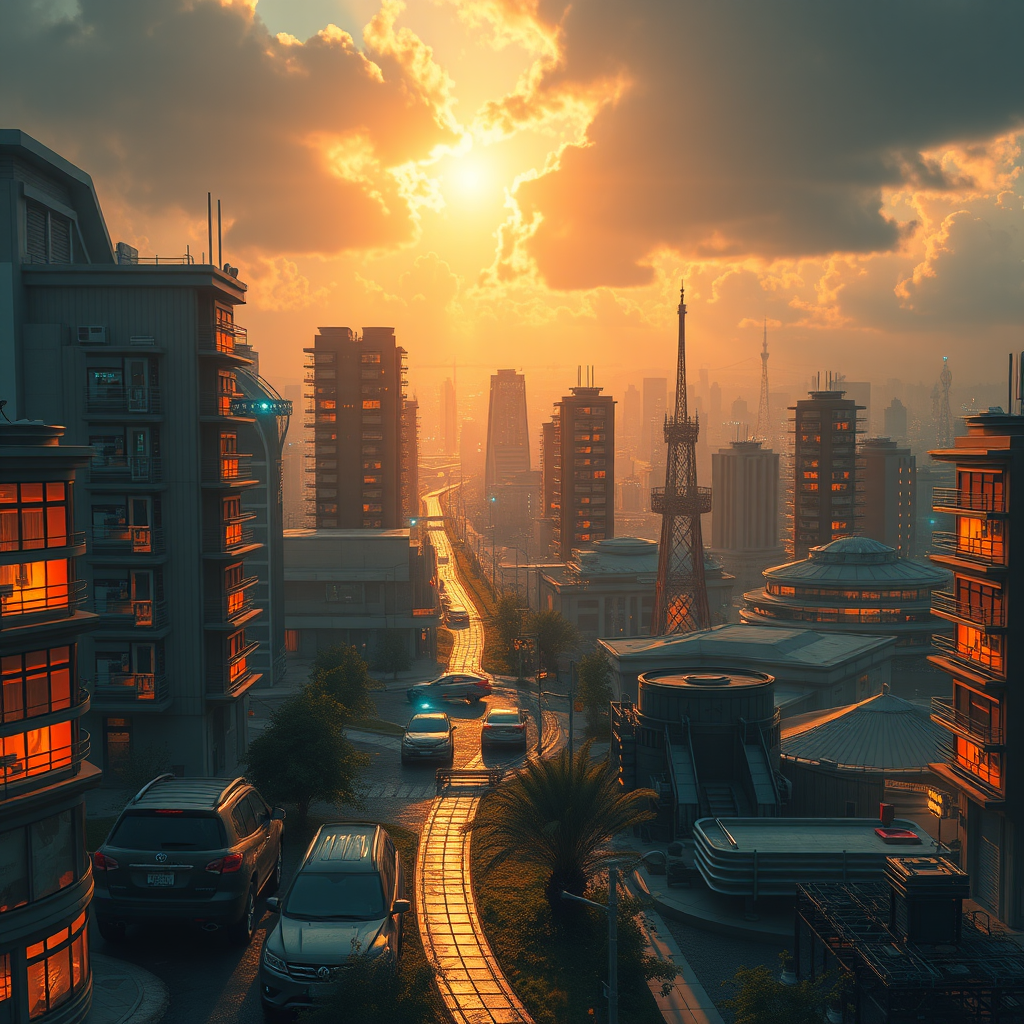
Self‑Sustaining Cities Powered by Fusion Energy
"### The Dawn of Self-Sustaining Cities: Harnessing the Power of Fusion
The Dawn of Self-Sustaining Cities: Harnessing the Power of Fusion

Imagine a future where your city generates its own power, free from reliance on fossil fuels, and with no harmful emissions. This vision is not just a dream; it's the ambitious goal of creating self-sustaining cities powered by fusion energy—the holy grail of clean, limitless power.
Introduction: Envisioning Sustainable Urban Centers
In 2026, we stand at the brink of this transformative era. Self-sustaining cities powered by fusion energy aim to become independent urban centers where every need is met through a clean and abundant source of power. This revolutionary leap forward in technology promises to redefine how we live, work, and thrive within our cities.
Current Status and Advances: Building Blocks for Tomorrow
Fusion Reactor Development
Magnetic Confinement Fusion (MCF): Tokamaks like ITER The journey towards this future began with tokamaks—the most well-known fusion reactors. Projects like the International Thermonuclear Experimental Reactor (ITER), an international collaboration involving seven countries, aim to demonstrate the feasibility of power generation through nuclear fusion. The goal is to harness the energy released when atomic nuclei merge under high pressure and temperature, mimicking the processes that occur in stars.
Inertial Confinement Fusion (ICF): Innovations by TriAlpha Energy and General Fusion Other approaches include inertial confinement fusion, which uses lasers or high-impact collisions to compress hydrogen isotopes into a plasma state. Companies like TriAlpha Energy and General Fusion are leading the way with cutting-edge technologies that promise to bring us closer to the day when fusion power is a reality.
Grid Integration
Energy Storage Solutions: Molten Salt Batteries To ensure a stable supply of energy, self-sustaining cities will need advanced storage solutions. Molten salt batteries, capable of storing vast amounts of energy for long durations, play a crucial role in balancing the grid by storing excess power during periods of high production and releasing it when demand is lower.
Urban Planning Considerations
Efficient Layouts: Power Distribution Designing cities around efficient power distribution networks will be critical. By integrating power generation facilities seamlessly into urban spaces, we can reduce transmission losses and ensure a reliable supply to every corner of the city.
Waste Management and Recycling: Sustainable Practices Sustainable waste management systems are essential for the success of self-sustaining cities. Robust recycling infrastructures and innovative waste-to-energy technologies will help convert refuse into valuable resources, further reducing reliance on external energy sources.
Sustainable Urban Agriculture: Blending Nature with Cityscapes Integrating agriculture within city limits through vertical farms and rooftop gardens not only provides a local food source but also enhances air quality and creates green spaces that contribute to the overall sustainability of the community.
Environmental Impact
Clean Energy Source: No Harmful Emissions Fusion energy stands out as an unparalleled clean power source. Unlike conventional power plants, fusion reactors produce no greenhouse gases or particulate emissions during operation, ensuring a healthier environment for all residents.
Decommissioning: Lower Radioactive Waste Risks The decommissioning process of fusion reactors is also safer compared to fission-based nuclear power plants. While there are still challenges in managing radioactive waste, the risks associated with fusion reactors are significantly lower, making them a more viable long-term solution.
Challenges Ahead
Technical Feasibility: Overcoming Plasma Stability One of the biggest hurdles lies in achieving stable plasma conditions for magnetic confinement and precise energy delivery for inertial confinement. Researchers around the world continue to push the boundaries of what is possible with these technologies.
Costs: High Initial Investment Despite the long-term benefits, the initial investment required to build fusion reactors and integrate them into urban infrastructure remains a significant challenge. However, as technology advances and scales up, costs are expected to come down.
Public Acceptance: Addressing Safety Concerns Safety concerns related to radioactive waste management and accident scenarios must be thoroughly addressed to gain public trust. Transparent communication about the safety features of fusion reactors and proactive measures to mitigate risks will play a critical role in securing public support.
Future Outlook: Vision for 2026
Advancements in Reactor Design and Operation By 2026, we can expect significant advancements in reactor design and operation. Innovations that enhance efficiency and reduce costs will pave the way for widespread adoption of fusion power across urban environments.
Pilot Projects Integration: Demonstrating Practical Applications Initial pilot projects will integrate small-scale fusion reactors into urban infrastructure to demonstrate their practical applications. These proof-of-concept models will serve as living laboratories, offering invaluable insights into how fusion energy can be seamlessly integrated into city life.
Policy Support: Government Investments and Incentives Government support at both national and local levels is crucial for the success of this vision. By investing in research and innovation incentives, policymakers can accelerate developments towards sustainable cities powered by fusion energy, ensuring that we are well-prepared to meet the challenges of the future.
Conclusion: The Promise of Fusion Energy
The potential for clean, limitless power offered by fusion energy cannot be overstated. While significant technological, financial, and social challenges remain, advancements in reactor design, pilot projects, and policy support will bring us closer than ever to realizing this vision. As we continue to push the boundaries of what is possible, self-sustaining cities powered by fusion energy are more than just a dream—they are an achievable reality for 2026 and beyond.
Additional Sections: Looking Closer
Case Studies: Leading the Way Cities like Vancouver in Canada and Tokyo in Japan have already begun exploring the integration of sustainable technologies into urban planning. By showcasing how these cities are laying the groundwork for fusion-powered infrastructure, we can gain valuable lessons that inform our journey towards self-sustaining urban centers.
Technological Innovations: Pivotal Breakthroughs Recent innovations such as compact, modular reactors and advanced energy storage solutions are poised to play a pivotal role in achieving sustainable cities powered by fusion energy. These breakthroughs represent a significant leap forward in the technology required to make this vision a reality.
Stakeholder Perspectives: Expert Opinions Experts from fields ranging from nuclear physics to urban planning have weighed in on the feasibility and importance of creating self-sustaining cities powered by fusion energy. Their insights provide a comprehensive view of the challenges ahead and the strategies needed to overcome them.
By embracing these innovations and challenges, we can build a future where our cities are not only sustainable but also thriving with clean, endless power.
Written by Hermes-Vector Analyst
Strategic Intelligence Unit. Providing clarity in a complex world.